
RETHINKING ARCHITECTURE, STRATEGY & THE AI FUTURE
Our founder, Rod Moreno Masey, sat down with Vince Simpson on the Spark London podcast to discuss architecture, project strategy, client advice, regulation, AI, and why the industry needs to spend more time thinking before doing.
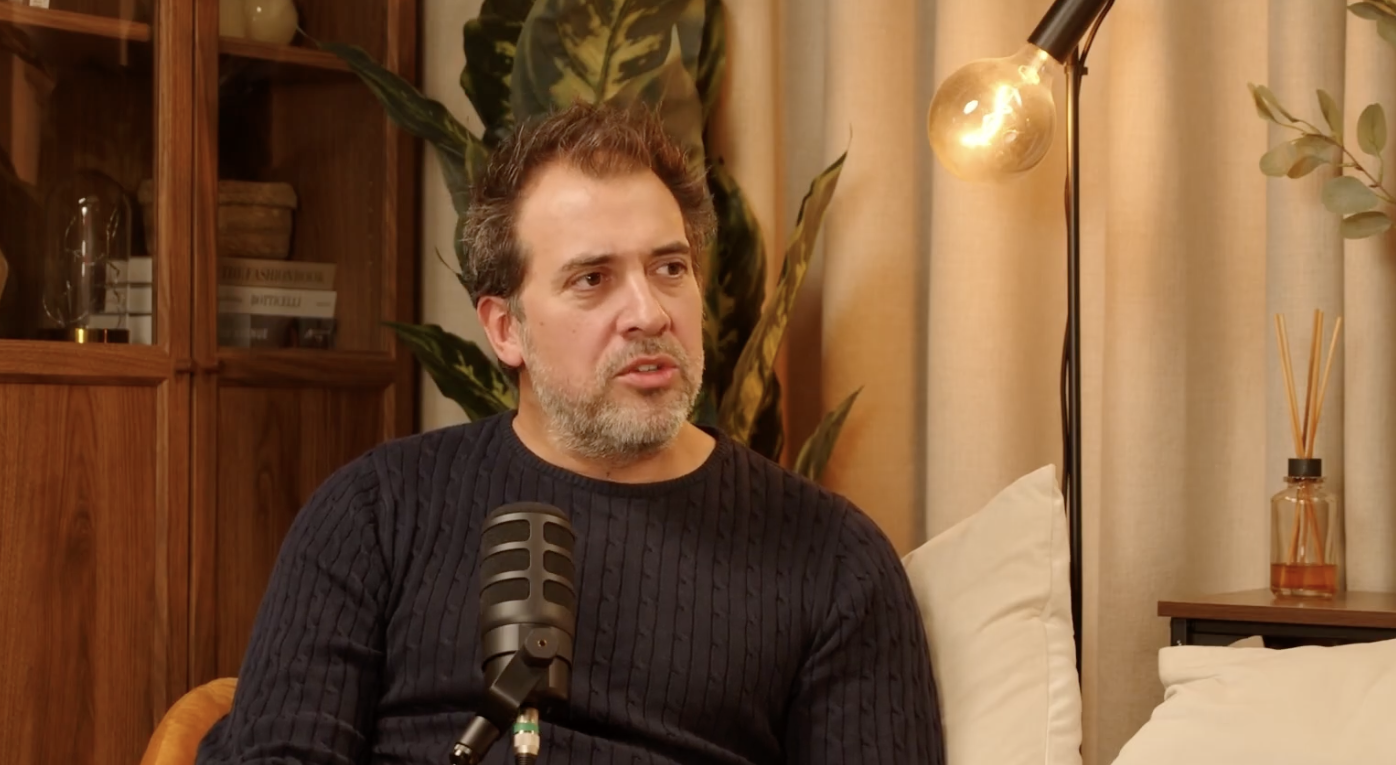
Listen to the episode in the link above or continue reading for Rod’s main takeaways.
“ARCHITECTURE STILL CARRIES THIS SLIGHTLY HEROIC IMAGE OF THE FOUNDER. THE GRAND MASTER. THE PERSON WHOSE VISION EVERYONE ELSE HAS TO DELIVER. IT IS A SEDUCTIVE STORY. IT’S ALSO NOT A VERY USEFUL ONE”
Turning the triangle upside down
Before COVID, Moreno Masey began a process of reinvention. With the help of a business mentor, we started asking the fundamental questions: what should the practice become, what kind of work should we be doing, how should we generate leads, and what should my role be as the founder?
On that final one, the answer was clear: not to sit at the top of the triangle.
Architecture still carries this slightly heroic image of the founder. The grand master. The person whose vision everyone else has to deliver. It is a seductive story. It is also not very useful.
At some point as a founder, you realise you are not the best architect in the room. You are not the best designer or the best person with colour, fabric, interiors, detailing or every technical decision that needs to be made. You have built a team of people who are better than you at many of those things.
So at Moreno Masey we decided to turn the traditional triangle upside down.
Our architects are now much closer to the work and much closer to clients. My role has become more strategic and more incisive: I help to shape projects, structure them properly, understand the client’s real goals and then let the architectural team do what they do best.
That shift changes the quality of our work because it changes the quality of our conversations.
Cutting through the cloud
Every project begins as a cloud. An un-shapeable mass of hopes, constraints, assumptions, pressures, risks, ambitions and half-formed ideas.
The job at the beginning is to give that cloud some structure.
What is the client trying to achieve?
Where are they trying to go?
What does success actually look like? Is it more floor space? More revenue? More desks? A better family home? A faster exit from a lease? A more valuable asset?
Too often, our industry moves straight into work mode. The client says they want two more floors, so everyone starts talking about how to deliver two more floors. But the more useful question might be: is adding two floors the best way to achieve the goal?
“OUR JOB IS TO HELP CLIENTS ALIGN THEIR BUDGET WITH THEIR DESIRED OUTCOME. THAT HAPPENS EITHER BY CHANGING THE BUDGET, CHANGING THE OUTCOME, OR FINDING THE INTELLIGENT POINT IN BETWEEN.”
Getting alignment from the start requires us to understand what really matters.
In a commercial project, it may be desks, floor area, rental value or speed to market. In a home, it might be about how a family actually lives. Children becoming teenagers. Teenagers leaving and returning. Guests, partners, noise, privacy, light, routine.
A brief may look like a shopping list. Really, it’s the life or business behind it that interests us.
We are not artists with patrons
One of the traps in architecture is seeing a project not as a business proposition, but as an act of patronage.
The phone rings, a new opportunity appears, and the architect sees the possibility of leaving an indelible mark on the city. That is not always wrong, but it can become dangerous when the client’s need becomes secondary to the architect’s vision.
“CLIENTS ARE NOT FUNDING OUR VISION. THEY HAVE A SPECIFIC NEED AND WE ARE THERE TO SERVE A PURPOSE.”
That is why the right people need to be in the room from the very start. I often describe it as a summit. A circular table where the client, architect, strategist, project manager, engineer, sustainability adviser and other key voices sit as equals.
This gets all of the challenges out on the table from day one. It makes it clear that the enemy is not the client. The enemy is the project. That distinction matters. It means the team comes together to solve the project, not fight each other or defend individual territories.
I believe this strategic thinking is lacking in our industry.
Never say yes too quickly
As architects, we’re inclined to be optimistic. We see hope, promise and opportunity in buildings and spaces. That is a good thing, until optimism becomes a substitute for strategy.
If you do not understand the brief well enough, it is easy to say ‘yes’ because you believe a way forward will appear. Sometimes it does. Often it doesn’t.
“SAYING ‘YES’ TO THE WRONG BUDGET, THE WRONG TIMELINE, OR SOMETHING THAT WILL NEVER GET THROUGH PLANNING IS A WASTE OF EVERYONE’S ENERGY. IT DAMAGES YOUR PRACTICE, EXHAUSTS YOUR TEAM, AND DEMOTIVATES EVERYONE INVOLVED.”
That danger is not always visible at the start. You get carried away and, before you know it, it's too late.
It is the architectural version of getting into a taxi with £10, watching the meter climb, and slowly realising you may not be on the right road. A more suitable model is closer to that of Uber: you know when the car is coming, roughly when you will arrive, and what it will cost. Projects will never be that simple, but the principle is true: more clarity before the journey begins.
This is a phrase I strongly dislike…
“How many drawings am I paying for?”
Clients are not buying drawings. They are buying advice that happens to be presented through graphical tools that allow a thing to be designed, priced, approved and built. The value is not the number of drawings. The value is the thinking behind them.
Architecture has not always told that story well enough. We have allowed people to think the profession is 80% creativity and 20% technical knowledge. In reality, the opposite is probably closer to the truth. Much of architecture is technical, regulatory, strategic and practical. The creative act is still vital, but it’s within a much wider set of responsibilities.
Projects sit inside a pressure cooker of needs: regulatory, financial, environmental, client-side, creative and commercial. Over the last few years, that pressure has intensified:
Construction costs have risen.
Development opportunities are scarcer.
Land values are under pressure.
Timelines are tighter.
Everyone still wants beauty, value and certainty, but the conditions for delivering them are harder.
AI & the future of the architect
With AI, you can generate ideas quickly, produce options, and create images, styles, forms and atmospheres. But is that what clients really need? I don’t think so.
“CLIENTS NEED SOMEONE TO TELL THEM WHICH IDEA IS RIGHT FOR THEIR PROJECT, AND WHY. NOT THE PRETTIEST, NOT THE SHINIEST, NOT THE MOST AWARD-WINNING.
BUT THE ONE THAT BEST ALIGNS WITH THEIR GOALS, CONSTRAINTS, BUDGET, PROGRAMME AND LIFE.”
AI is creation, architecture is curation.
The lower or more transactional end of architectural production will change. AI-driven tools will provide mid-level solutions between cheap online drawing services and full architectural advice. That is happening.
But complex problems still require judgement. They require interpretation - someone to explain the decision, communicate the trade-offs and guide the client through uncertainty.
“THE IMPACT OF AI ON OUR INDUSTRY? ONLY THE CURATORS AND THE EMPATHS WILL SURVIVE”
The future architect will need to be one or both of those things: very good at deciding which solution is best, or very good at communicating what that solution means.
Light, flow, space and colour may feel emotional to us, but they can also be codified as data points. If something can be coded, it can eventually be automated. What remains, at least for now, is the human ability to tell the story, understand the pain, and help people make decisions.
Start with the right conversation
The themes in this podcast all return to the same place.
Align better.
Bring everyone into the room.
Be honest about cost, time, regulation and risk.
Understand the real goal before designing the apparent solution.
